Are you buying the Brickell lifestyle, or are you buying one specific building with its own costs, rules, and tradeoffs? That question matters more than many buyers realize. In Brickell, two condos just a few blocks apart can offer very different daily routines, fee structures, and long-term risks. If you are thinking about making a move here, this guide will help you compare towers more carefully and commit with more confidence. Let’s dive in.
Why Brickell Feels Different
Brickell is not just another Miami neighborhood with condos scattered around it. It functions more like a dense, transit-oriented urban district built around pedestrian activity, major residential towers, and constant movement throughout the day.
That setup shapes how you live once you move in. Your building’s location can affect how often you walk, whether you rely on transit, how much street activity you notice, and how connected you feel to the rest of Miami.
Transit Access Is a Big Selling Point
Brickell offers access to the free Metromover seven days a week, along with Metrorail, Metrobus, the City of Miami trolley, and The Underline. These connections link residents to places like Brickell City Centre, Brickell Village, the Financial District, Simpson Park, Southside Park, and Vizcaya.
For many buyers, that means less dependence on a car for everyday errands or commuting. It also means your exact address can have a major impact on convenience, even when two listings are both marketed as being in Brickell.
Walkability Changes by Address
One of the biggest mistakes buyers make is assuming all of Brickell offers the same walkable lifestyle. It does not. Walkability and transit access can vary sharply depending on the exact street and tower.
For example, Brickell Avenue has a 99 Walk Score and 96 Transit Score, while 2025 Brickell Avenue scores 64 and 67. Other addresses also vary, including 901 Brickell Key Boulevard at 82 and 96, and Brickell Key Drive at 47 and 91.
That is why it helps to evaluate the building, not just the neighborhood label. If walkability is one of your top priorities, check how that specific address fits your routine.
Compare Towers, Not Just Listings
In Brickell, condo shopping is rarely just about square footage and finishes. The real comparison happens at the building level.
Two units with similar price points can differ in monthly cost, maintenance needs, exposure to nearby construction, and long-term value. That is why smart buyers look past the photos and start asking tower-specific questions early.
Older Buildings Are Not Automatic No's
A newer tower may look appealing at first glance, but age alone should not make the decision for you. In Miami-Dade, older condominiums that were 30 years or more in age were selling faster than newer units in mid-2025.
That tells you something important. A well-maintained older building in Brickell can remain competitive when pricing and upkeep make sense.
New Development Can Change the Picture
Brickell remains an active development area. Miami Realtors reported that zip code 33130, which includes the Brickell area, ranked among the places with the most housing units authorized in the first half of 2025.
For buyers, that can affect more than just the skyline. New development can influence construction noise, future inventory competition, delivery timing, and even whether a view you love today stays the same later.
Views Matter, But They Are Unit-Specific
Brickell and Downtown sit in a district known for bay, river, and ocean views. That helps explain why buyers often pay close attention to exposure, floor height, and balcony orientation.
Still, a premium view in one stack does not guarantee the same experience elsewhere in the building. In Brickell, value often becomes stack-specific and floor-specific, so it is worth checking the exact outlook from the exact unit.
Amenities Should Match Your Real Life
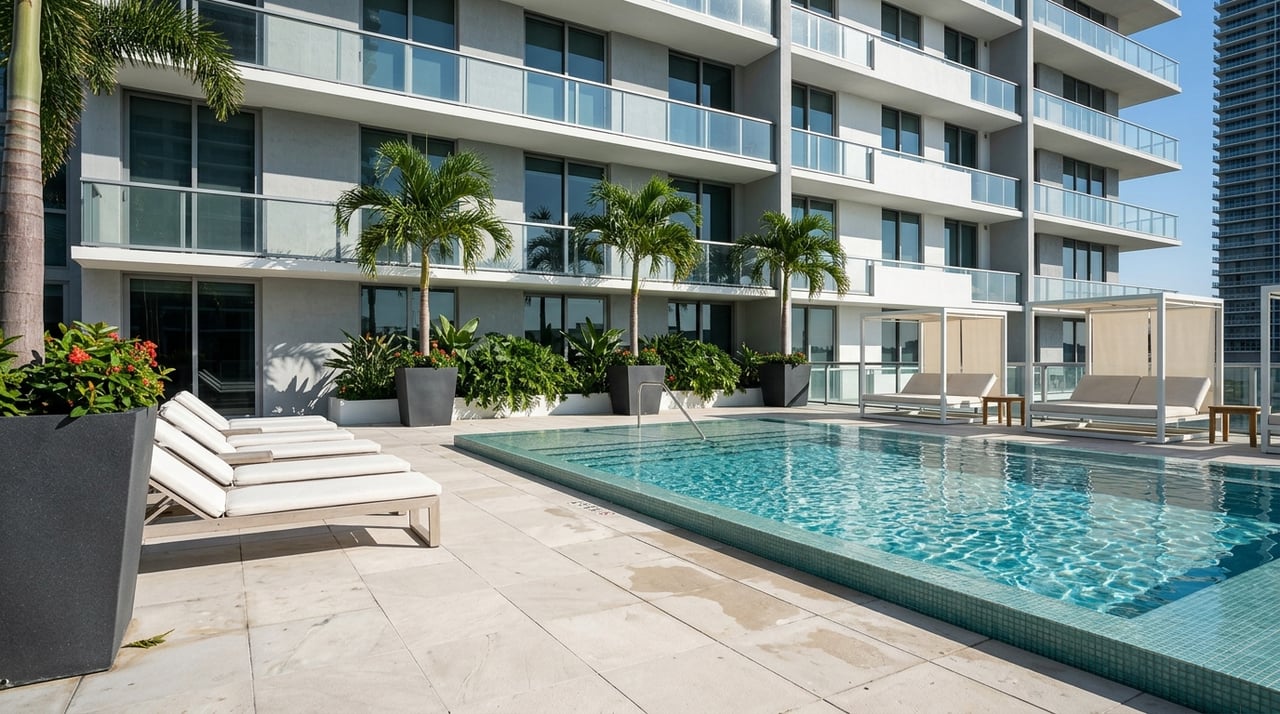
Many Brickell towers compete by offering long amenity lists. Pools, gyms, coworking spaces, valet service, and guest suites can all sound impressive during a showing.
But amenities are not free. Condo assessments fund common expenses, so the better question is whether you will truly use what you are paying for every month.
Ask What You Will Actually Use
Before you commit, think honestly about your habits. Do you want a full fitness center because you will use it weekly, or do you already have a routine somewhere else?
The same goes for valet, club rooms, or coworking lounges. An amenity package can add value, but only if it fits the way you actually live.
Understand HOA Fees and Special Assessments
Monthly condo dues are one of the biggest factors in your true cost of ownership. In Florida condominiums, regular assessments pay common expenses and must be collected at least quarterly.
Those regular dues are only part of the story. Special assessments are separate charges for expenses not included in the annual budget, and they can meaningfully affect your cash flow.
Who Approves Special Assessments
The governing documents determine whether the board or the unit owners approve a special assessment. For non-emergency special-assessment meetings, at least 14 days' notice is required.
This is one reason the condo documents matter so much before you buy. The rules around approvals, budgeting, and owner obligations can vary from one association to another.
Reserves and Inspections Matter More Than Ever
If you are buying in Brickell, reserve funding and inspection status deserve close attention. These items can affect your monthly costs today and your risk of future assessments later.
This is especially important in Florida, where condo requirements around structural review and reserve planning have become more significant for many buildings.
Milestone Inspections in Florida
Florida requires milestone inspections for condominium and co-op buildings that are three habitable stories or more, generally by age 30 and every 10 years after that. Local enforcement agencies can require earlier inspections in saltwater-adjacent conditions, which is especially relevant in coastal Miami.
For a Brickell buyer, that means you should understand where the building stands in its inspection timeline before you move forward.
What a SIRS Tells You
Florida also requires a Structural Integrity Reserve Study, or SIRS, for residential condominiums with buildings three habitable stories or higher, at least every 10 years. Existing unit-owner-controlled associations had to complete the first SIRS by December 31, 2025, and associations with a milestone inspection due on or before December 31, 2026 can complete the SIRS at the same time.
The SIRS is a budget-planning tool that identifies the components the association must maintain and replace and how to fund them. In practical terms, that means reserve funding can directly affect dues and future special assessments.
Reserve Rules Have Changed
For budgets adopted on or after December 31, 2024, associations subject to SIRS may not waive reserves for the required SIRS items. That can be good for long-term planning, but it may also influence the fee profile you see today.
Starting with sales contracts entered after December 31, 2024, Florida also requires a clear disclosure when an association has not completed a required milestone inspection or SIRS. That makes this information especially important before you sign.
Documents to Review Before You Commit
In Brickell, the documents can matter just as much as the view. Reviewing them early can help you spot issues that are easy to miss during a tour.
Association official records include the declaration, bylaws, rules, insurance policies, accounting records, contracts, SIRS, milestone inspection reports, and related structural or life-safety inspection records.
Your Brickell Condo Review List
Before making an offer, ask to review:
- The building budget
- Reserve schedules
- SIRS status
- Milestone inspection status
- Insurance information
- Parking details
- Storage availability
- Rental rules
- Pet rules
- Recent board minutes for planned repairs or assessments
This is where a building-by-building market really shows itself. Two towers in the same part of Brickell can look similar online and feel very different once you review the paperwork.
Lifestyle Tradeoffs to Expect
Brickell’s appeal is real. Many buyers are drawn to the combination of transit access, walkable micro-locations, retail and dining options, and a true city-center feel.
At the same time, the same density that creates energy can also create tradeoffs. Noise, traffic, construction activity, privacy concerns, and changing views are all possible, and they tend to be building-specific rather than neighborhood-wide.
The Underline Is Expanding Connectivity
The Underline adds another layer to Brickell living. Its Brickell segment has already opened, Phase 2 opened in 2024, and the full 10-mile corridor is expected to be completed in 2026.
Once complete, the project is expected to serve 107,000 residents within a 10-minute walk and improve connectivity through pedestrian and bicycle paths, lighting, and wayfinding. For buyers who value mobility and outdoor access, that is a meaningful feature to watch.
A Smart Brickell Buying Mindset
The biggest takeaway is simple. Brickell is not one condo market. It is a collection of towers, addresses, exposures, budgets, and rules that can produce very different outcomes.
If you focus first on the specific building instead of the neighborhood name, you will ask better questions and make a stronger decision. That approach can help you balance lifestyle, monthly costs, and long-term confidence before you commit.
If you want clear, building-specific guidance as you compare Brickell condos, connect with Dominic Rivera for thoughtful, hands-on support through the process.
FAQs
What should you review before buying a Brickell condo?
- You should review the building budget, reserve schedule, SIRS, milestone inspection status, insurance, parking, storage, rental rules, pet rules, and recent board minutes.
Why do HOA fees vary so much in Brickell condo buildings?
- HOA fees can vary because regular assessments cover common expenses, and each building has different amenities, maintenance needs, reserve funding levels, and budget priorities.
Are older Brickell condo buildings a bad investment?
- Not necessarily. Mid-2025 Miami-Dade data showed older condominiums selling faster than newer units, which suggests that strong maintenance and pricing can keep older buildings competitive.
How important is walkability when choosing a Brickell condo?
- Walkability is very important if you want a transit-first lifestyle, but it is highly address-specific in Brickell, so you should evaluate the exact tower location instead of assuming the whole area offers the same experience.
What is a SIRS in a Florida condo building?
- A SIRS, or Structural Integrity Reserve Study, is a required budget-planning tool for certain residential condominium buildings that identifies key components the association must maintain and replace and how to fund them.